Plant propagation from cuttings is one of the most accessible and rewarding skills any gardener can learn. Instead of buying new plants, you can multiply your collection for free — or start with a single cutting shipped to your door and grow it into a thriving specimen. Whether you are rooting a plumeria stem in perlite or dividing a tradescantia clump, the principles are the same.
At Demo Kotsonis Plants we propagate thousands of plants every year from our Florida nursery. This guide shares the techniques we use daily, adapted for home growers working with windowsills, patios, and backyard gardens.
Understanding Plant Cuttings: Types and Terminology
Before you make your first cut, it helps to understand the different types of cuttings:
Stem Cuttings
The most common method. You remove a section of stem — typically 4–8 inches — that includes at least two nodes (the bumps where leaves emerge). This works beautifully for plumeria, sanchezia, cranberry hibiscus, and most tropical ornamentals.
Tip Cuttings
A subtype of stem cutting taken from the actively growing tip of a branch. Tip cuttings root faster because they contain higher concentrations of natural auxins (rooting hormones). Mexican sunflower and tradescantia root exceptionally well from tip cuttings.
Hardwood Cuttings
Taken from mature, dormant wood — typically in late fall or winter. This is how fig and mulberry are most commonly propagated. Hardwood cuttings take longer to root but produce very sturdy plants.
Division
Some plants, like Moses in the Cradle and tradescantia, naturally form clumps that can be divided into multiple plants. Simply separate the root mass and replant.
For a complete breakdown, read Unrooted vs Rooted Cuttings — What to Know.
How to Root Plant Cuttings: Step by Step
Our detailed guide on How to Root Plant Cuttings walks through the full process. Here is the condensed version:
- Select healthy material — choose stems that are firm, disease-free, and actively growing (for softwood cuttings) or fully mature (for hardwood)
- Make a clean cut — use sharp, sterilized pruners. Cut just below a node at a 45° angle to maximize the rooting surface
- Remove lower leaves — strip leaves from the bottom half of the cutting to prevent rot when buried in the medium
- Apply rooting hormone (optional but helpful) — dip the cut end in powdered or gel rooting hormone
- Insert into medium — use a well-draining mix of perlite and peat, or pure perlite for species prone to rot. See Soil Mixes for Rooting Cuttings
- Maintain humidity — cover with a clear plastic bag or humidity dome. Mist daily
- Provide bright indirect light — avoid direct sun, which can overheat the cutting
- Wait patiently — most softwood cuttings root in 2–6 weeks. Hardwood cuttings may take 6–12 weeks
Water vs. Soil Propagation
Some growers prefer to root cuttings in water. This works well for tradescantia, pothos, and other soft-stemmed plants. However, soil-rooted plants typically transition better to outdoor growing. Our comparison guide covers the tradeoffs: Water Propagation vs Soil Propagation.
Best Plants for Propagation From Cuttings
Not every plant roots easily from cuttings. Here are the species we grow and sell that propagate reliably:
Plumeria (Frangipani)
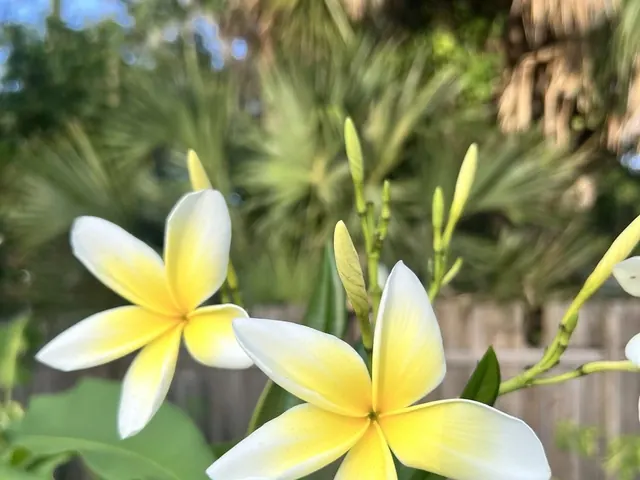
Plumeria is the quintessential cutting-propagated plant. We sell six varieties including Yellow/White, Bridal Bouquet (Pudica), and classic White. Plumeria cuttings should be allowed to callous for 5–7 days before planting in a fast-draining cactus mix. They root best in warm conditions (above 70°F).
Sanchezia
Sanchezia speciosa is a stunning tropical shrub with bold yellow-veined leaves. It roots readily from stem cuttings in 3–4 weeks and grows rapidly once established.
Tradescantia Sillamontana (Cobweb Spiderwort)
Tradescantia sillamontana is covered in soft, silvery hairs and roots almost effortlessly from stem cuttings. Simply snip a 4-inch piece, stick it in moist soil, and it will root within a week.
Mexican Sunflower (Tithonia)
Mexican sunflower grows explosively from cuttings and produces vibrant orange blooms that attract butterflies and hummingbirds. An excellent choice for beginners.
Clusia
Clusia is a dense, evergreen shrub popular as a hedge in South Florida. It propagates well from semi-hardwood cuttings taken in spring or early summer.
Moses in the Cradle (Tradescantia spathacea)
Moses in the Cradle produces offsets freely and can be divided or propagated from individual rosettes. It thrives in shade to partial sun and makes an excellent ground cover.
For more species suited to beginners, see Best Plants for Beginners to Propagate.
Common Propagation Mistakes to Avoid
Even experienced growers make errors. Our guide on Common Propagation Mistakes covers the most frequent pitfalls:
- Overwatering — the #1 killer. Cuttings need moisture but not soggy conditions
- Using dull or dirty tools — leads to crushed tissue and bacterial infection
- Too much direct sun — cuttings without roots cannot replace water lost through transpiration
- Skipping the callous period for succulent-stemmed plants like plumeria
- Giving up too early — some cuttings take 8–12 weeks; check for rot before discarding
After Rooting: Transplanting and Hardening Off
Once roots are 1–2 inches long, it is time to transplant. Our guide on How to Transplant Newly Rooted Cuttings details the process:
- Gently remove the cutting from its rooting medium
- Plant in a container one size up with well-draining potting mix
- Water thoroughly and place in bright indirect light for 7–10 days
- Gradually introduce to full sun conditions
- Begin fertilizing after 2–3 weeks with a diluted balanced fertilizer
For propagation-specific tips on edible species, see Propagation Tips for Edible Herbs and Useful Plants and Propagation Tips for Fruiting Plants.
Shipping and Receiving Live Cuttings
When you order cuttings online, transit stress is a real concern. Our guide on How to Reduce Shipping Stress in Live Plant Orders explains best practices for both senders and receivers. At Demo Kotsonis Plants, every cutting is wrapped in damp paper towel, secured in a ventilated box, and shipped with a heat pack in cold weather.
Frequently Asked Questions
What is the best time of year to take cuttings?
For most tropical plants, spring and early summer (March–June) are ideal because plants are actively growing and produce auxins that promote root formation. Hardwood cuttings of deciduous species like fig and mulberry are best taken in late fall or winter.
Do I always need rooting hormone?
No. Many plants root fine without it — tradescantia, Moses in the Cradle, and Mexican sunflower are examples. However, rooting hormone significantly improves success rates for harder-to-root species like plumeria and clusia.
How do I know if a cutting has rooted?
Gently tug on the cutting after 3–4 weeks. If you feel resistance, roots have formed. You can also look for new leaf growth, which usually indicates active root development below the soil.
Can I propagate any plant from cuttings?
Not all plants propagate well from stem cuttings. Palms, for example, cannot be grown from cuttings — they must be grown from seed. Most herbaceous and semi-woody tropical plants, however, propagate readily.
How many cuttings should I take to ensure success?
We recommend taking 3–5 cuttings of each variety. Even experienced propagators expect some losses, so starting with multiple cuttings ensures you will end up with at least one healthy plant.
Shop Our Propagation-Ready Plants
Browse our full selection of plumeria cuttings, tropical ornamentals, and propagation-friendly starters. Every plant ships from our Florida nursery with rooting instructions included.