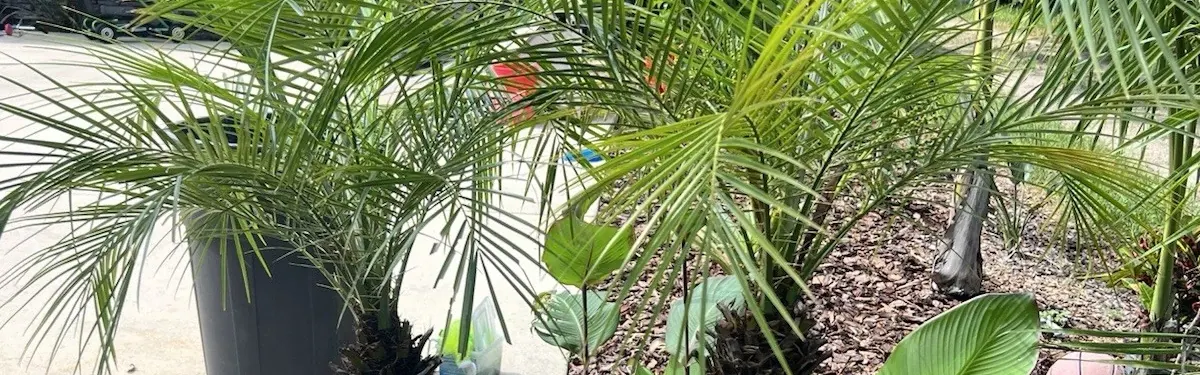
Dreaming of a lush, tropical oasis right in your South Florida backyard? Look no further than the charming Pygmy Date Palm, a compact powerhouse that delivers big on exotic appeal without demanding too much space. This miniature marvel is a staple in many Florida landscapes, perfect for adding a touch of the tropics to even the coziest corners.
Overview
The Pygmy Date Palm, scientifically known as Phoenix roebelenii, is a highly popular ornamental palm native to Southeast Asia. Despite its "pygmy" moniker, this palm can still reach a respectable height, though it remains significantly smaller than its majestic cousins like the Canary Island Date Palm. Its slender trunk, often adorned with old leaf bases, is topped with a dense crown of gracefully arching, feather-like fronds. These fronds are a beautiful deep green, creating a soft, elegant silhouette that enhances any landscape. It's often seen as a multi-trunk specimen in cultivation, adding to its full and lush appearance.
- Botanical Name: Phoenix roebelenii
- Common Names: Pygmy Date Palm, Dwarf Date Palm, Robellini Palm
- Plant Type: Palm tree
- Mature Size: 6-12 feet tall, 5-8 feet wide
- Growth Rate: Slow to moderate
- Lifespan: Decades
- Foliage: Evergreen, pinnate (feather-like) fronds
- Flowers: Small, creamy yellow flowers (dioecious - male and female flowers on separate plants)
- Fruit: Small, dark brown or black, date-like fruits (edible but not commercially significant)
- Native Area: Laos, Vietnam, China
Growing Conditions
Successfully growing a Pygmy Date Palm in South Florida is generally straightforward due to its adaptability to our climate.
- Light: Prefers full sun to partial shade. In South Florida, it can thrive in full sun, especially once established, but will also perform well in a location that receives some afternoon shade, which can protect its foliage from intense summer sun.
- Soil: Adaptable to a wide range of well-draining soils. It prefers rich, loamy soils but tolerates sandy or clayey conditions as long as drainage is good. Avoid heavy, waterlogged soils.
- Water: Requires consistent moisture, especially when young. Once established, it is moderately drought-tolerant but will look its best with regular watering during dry periods. Water deeply to encourage strong root development, allowing the top few inches of soil to dry out between waterings.
- Temperature: Thrives in warm, humid conditions. It is tolerant of heat but sensitive to prolonged cold. It can tolerate brief dips to 25°F (-4°C) but extended freezes can cause damage.
- USDA Zones: 10b-11. Perfectly suited for most of South Florida. In colder parts of Florida (Zone 9b-10a), protection may be needed during severe freezes.
Care & Maintenance
- Fertilization: Fertilize 2-3 times a year (spring, summer, fall) with a slow-release palm-specific fertilizer that includes micronutrients like magnesium, manganese, and potassium. Follow product instructions carefully. Deficiencies can lead to yellowing fronds (frizzle top is a common sign of manganese deficiency).
- Pruning: Minimal pruning is required. Remove only dead, damaged, or yellowed fronds close to the trunk. Avoid over-pruning green fronds, as this stresses the palm and can reduce its vigor. Wear gloves, as the petioles (leaf stems) have sharp spines.
- Pest Control: Generally pest-free, but watch for scale insects, mealybugs, and spider mites, especially in dry conditions. Horticultural oil or neem oil can be effective treatments.
- Disease: Can be susceptible to lethal yellowing, though less so than some other palm species. Maintain good cultural practices to promote overall health and reduce susceptibility.
Propagation Tips
Propagation of Phoenix roebelenii is primarily done by seed.
- Seed Propagation: Collect mature seeds and clean them thoroughly. Scarify the seeds slightly (gently scratch the outer coat) to improve germination. Soak seeds in warm water for 24-48 hours, changing the water regularly. Plant in a well-draining seed-starting mix, ensuring good warmth and moisture. Germination can be slow and erratic, taking several months. Patience is key!
Common Problems & Solutions
- Yellowing Fronds (Frizzle Top): Often a sign of manganese or potassium deficiency. Apply a palm-specific fertilizer with high levels of these micronutrients.
- Brown Tips on Fronds: Can indicate inconsistent watering (too much or too little), low humidity, or salt stress. Ensure proper watering and consider flushing the soil if salt build-up is suspected.
- Weak or Stunted Growth: Usually due to poor nutrition or inadequate light. Re-evaluate your fertilizing schedule and ensure the palm is receiving enough sunlight.
- Scale Insects/Mealybugs: Small, often cottony pests on fronds. Treat with horticultural oil or insecticidal soap.
Why Grow This Plant?
The Pygmy Date Palm is an absolute gem for South Florida landscapes, offering an array of benefits. Its compact size makes it perfect for smaller yards, patios, or even as a stunning container plant, bringing tropical elegance to porches and entryways. Its graceful arching fronds create a soft, inviting aesthetic, making it an excellent choice for accent planting, creating a tropical border, or framing a doorway. It's relatively low-maintenance once established, requiring minimal pruning and moderate watering. Plus, its resilience in our warm, humid climate makes it a reliable and long-lasting addition to your garden. For a touch of exotic flair and manageable beauty, the Pygmy Date Palm is truly unbeatable!