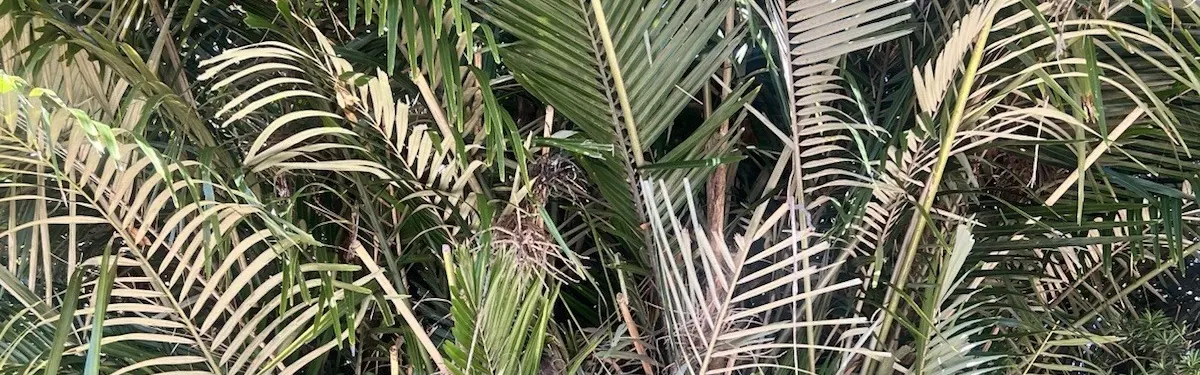
Originating in the subtropical and tropical forests of Taiwan and the Ryukyu Islands, the Arenga Palm (Arenga engleri) is a true gem for any South Florida landscape. This compact and clustering palm is a fantastic alternative to more common varieties, offering unique texture and graceful movement that will elevate your garden's aesthetic. Its charming size makes it perfect for smaller yards or as an understory plant in larger, more established gardens.
Overview
A clustering, suckering palm that forms a dense, multi-stemmed clump, the Arenga Palm is known for its relatively slow growth and manageable size. Its elegant, upright fronds are a deep, glossy green, with a distinctive silvery-white underside, creating a beautiful contrast. This palm is a fantastic choice for adding a touch of the tropics without overwhelming your space.
- Botanical Name: Arenga engleri
- Common Names: Arenga Palm, Dwarf Sugar Palm, Taiwan Sugar Palm
- Plant Type: Clustering Palm
- Mature Size: Typically 8-15 feet tall and 6-10 feet wide, though some can reach 20 feet in ideal conditions.
- Growth Rate: Slow
- Foligage: Pinnate (feather-like) fronds, dark green above, silvery-white below.
- Flower Color: Creamy yellow to brown (monoecious - male and female flowers on the same plant).
- Fruit: Small, round, reddish-orange fruits (caution: fruits can be irritating if handled).
- Native Range: Taiwan, Ryukyu Islands
Growing Conditions
The Arenga Palm thrives in conditions mimicking its native subtropical habitat. Providing the right environment is key to a healthy and vigorous plant in your South Florida garden.
- Light: Prefers partial shade to full shade, especially in the harsh South Florida afternoon sun. While it can tolerate some morning sun, too much direct, intense sunlight can scorch its fronds. It's an excellent choice for a shady patio or the north side of a building.
- Soil: Adaptable to a variety of soils but prefers rich, well-draining soil. It can tolerate sandy soils common in Florida, but amending with organic matter like compost will significantly improve its health and vigor. A slightly acidic to neutral pH (6.0-7.0) is ideal.
- Water: Requires consistent moisture, especially during dry periods and its establishment phase. Do not allow the soil to dry out completely between waterings. However, it is important to ensure good drainage to prevent root rot. Once established, it can tolerate short periods of drought but will perform best with regular irrigation.
- Temperature: Thrives in warm, humid conditions. It is tolerant of light frosts, but prolonged freezing temperatures can damage or kill it.
- USDA Zones: 9B-11. This makes it particularly well-suited for Central and South Florida.
Care & Maintenance
The Arenga Palm is relatively low-maintenance, making it a wonderful addition for both experienced and novice gardeners.
- Fertilization: Fertilize 2-3 times per year (spring, summer, early fall) with a good quality slow-release palm fertilizer that contains micronutrients, especially magnesium and potassium. Follow the product instructions carefully. Yellowing fronds can often indicate a nutrient deficiency.
- Pruning: Prune only dead or severely damaged fronds. Avoid removing healthy, green fronds as this can stress the palm and remove vital nutrients. The clustering nature means suckers will emerge from the base. You can allow these to grow to maintain a full, clumping look, or selectively remove them to manage size or shape, though most growers appreciate its natural clumping habit.
- Pest and Disease: Generally resistant to most pests and diseases. Occasionally, it may encounter mealybugs or spider mites, especially in very dry conditions. Fungal issues can arise in overly wet, poorly drained soil.
Propagation Tips
The Arenga Palm is best propagated by division of its suckers.
- Select a healthy sucker: Choose a young, vigorous sucker that has developed some roots of its own. It's best done when the palm is well-hydrated.
- Separate the sucker: Using a sharp, sterilized spade or knife, carefully sever the sucker from the main plant, ensuring you get a good portion of its root system.
- Pot or plant: Plant the separated sucker immediately into a well-draining pot with good quality potting mix or directly into the ground in a suitable location.
- Water and care: Keep the soil consistently moist (but not waterlogged) and provide some shade until the new plant is established. It may take some time for the new plant to fully establish and show significant growth.
Common Problems & Solutions
- Yellowing Fronds: Often indicates a nutrient deficiency (magnesium or potassium are common culprits in Florida soils). Apply a balanced palm fertilizer with micronutrients. It can also be a sign of overwatering or underwatering, so check your irrigation schedule.
- Scorched Fronds: Too much direct, intense sun, particularly in hot afternoons. Move potted palms to a shadier location or provide shade for in-ground plants during the hottest part of the day.
- Root Rot: Caused by overly wet, poorly drained soil. Ensure good drainage and adjust watering practices. In severe cases, the palm may need to be replanted in better-draining soil.
- Slow Growth: This is a naturally slow-growing palm, so patience is key. Ensure it's receiving adequate water, nutrients, and appropriate light conditions.
Why Grow This Plant?
The Arenga Palm is an exceptional choice for South Florida landscapes for numerous reasons. Its manageable size makes it perfect for smaller gardens, courtyards, or as a striking container plant. The unique two-tone foliage adds architectural interest and movement, catching the light beautifully. Beyond its aesthetic appeal, it's relatively low-maintenance and cold-hardy for our region, offering a touch of exotic elegance without the fuss. If you're looking for a graceful, clumping palm that thrives in shady nooks and brings tropical charm, the Arenga Palm is an unmissable addition to your garden palette.